Tempio di Giove Lustrale
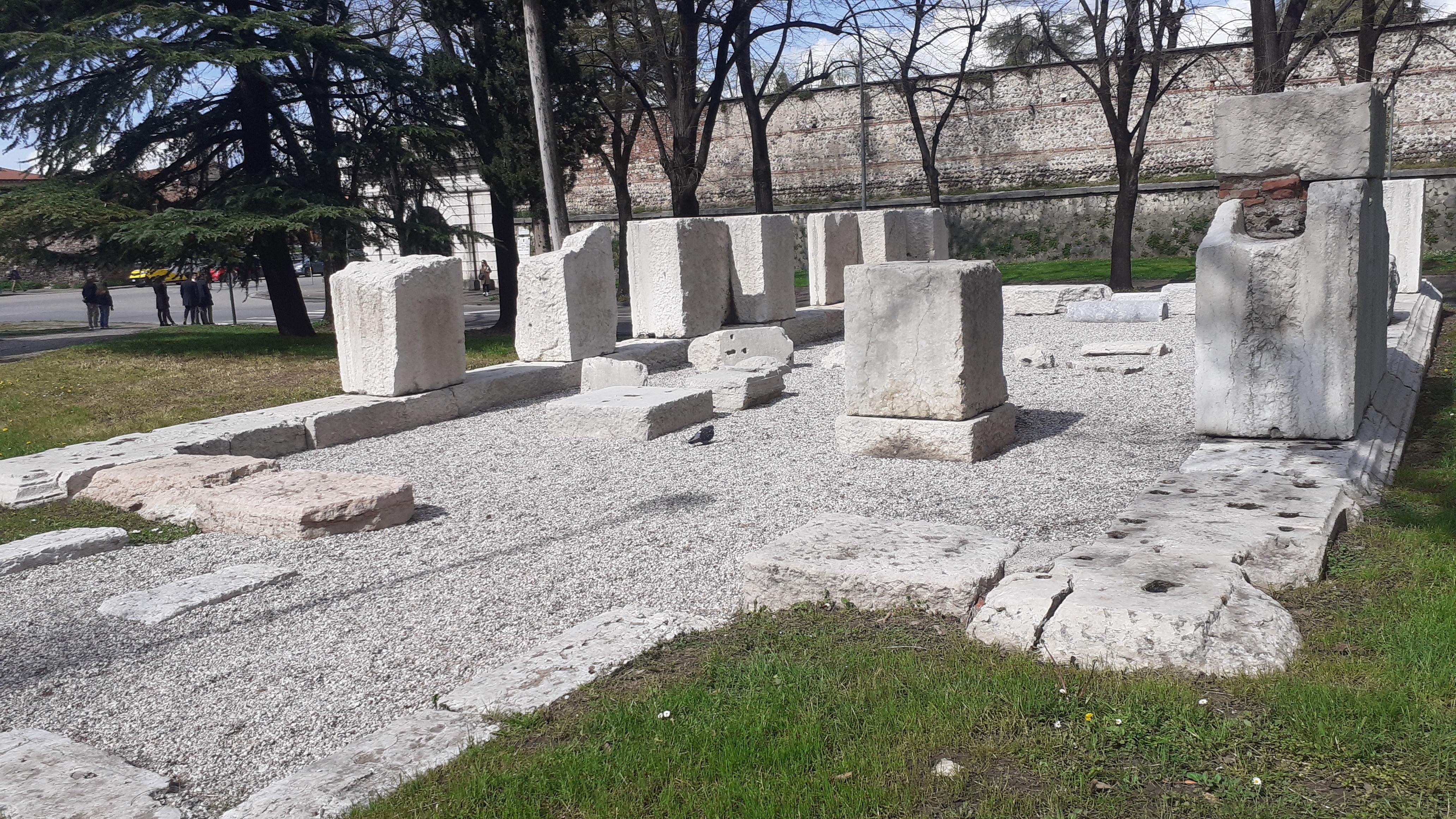
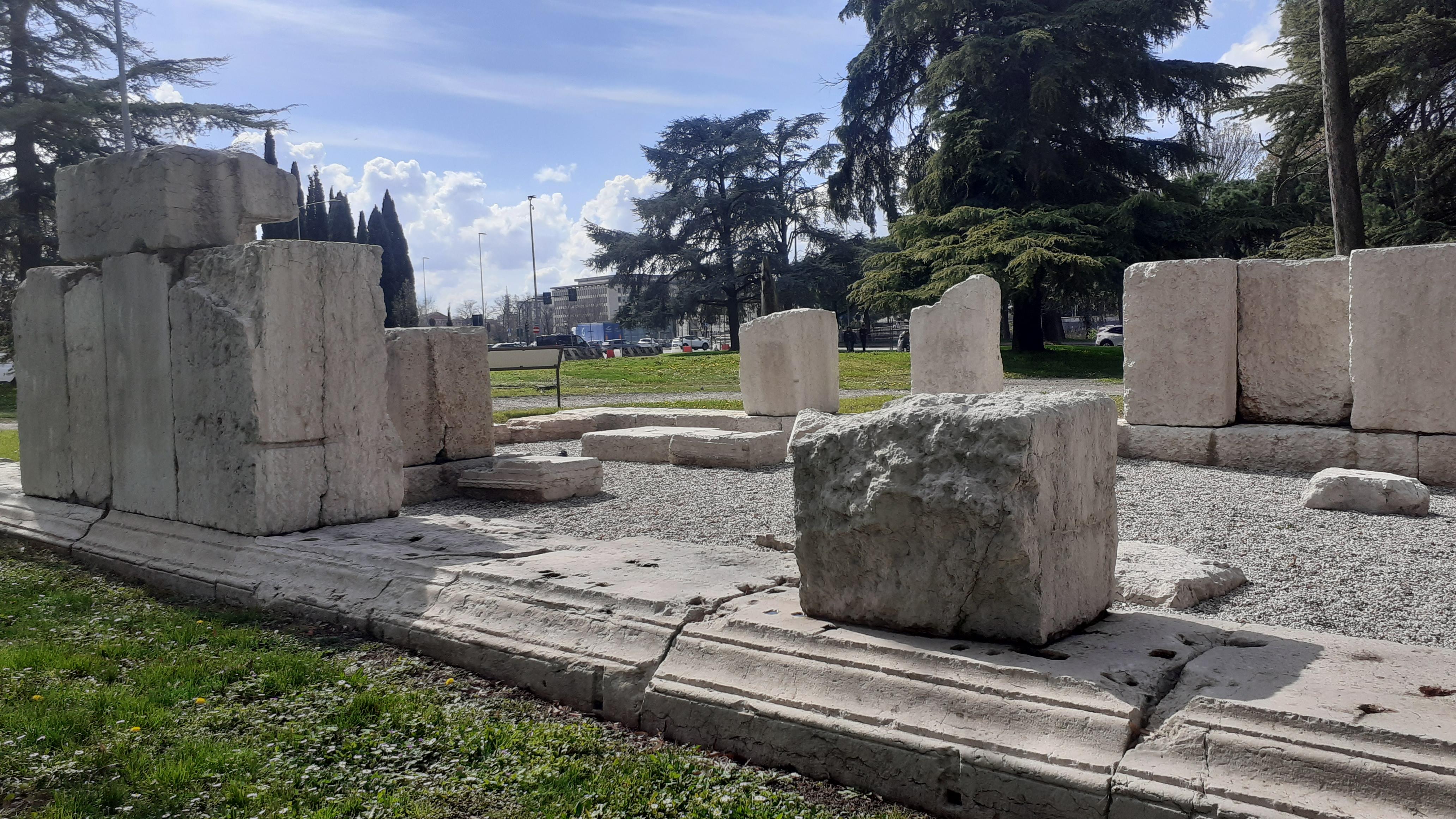
Tempio di Giove Lustrale stands in Verona’s Roman landscape, near the ancient Via Postumia and Porta Iovia, now Porta Borsari. Built in the first half of the first century, the sanctuary honoured Jupiter Lustralis, a deity associated with purification rituals. Measuring about eighteen metres by ten, it rose on a 2.4-metre podium with four frontal columns and a large altar.
A barrel-vaulted underground chamber occupied the podium, linking the architecture to ceremonies involving water. A basin and an inscription by Febo, a slave responsible for lead water pipes, support that connection. Archaeologists identified the sanctuary after excavations in 1930, following the demolition of San Michele alla Porta, whose foundations rested on the Roman masonry. Further work in 1998 revealed previously unstudied parts of the hypogeum, while the remaining podium stones were moved to gardens near Porta Vittoria.
The sanctuary once stood beside a Roman postal station, warehouses and the headquarters of a muleteers’ guild. Its surviving stones preserve a layered history of worship, water and reuse across Verona.
- City
- Verona
- Content updated
Take this page with you
The myTuur app is free, and once you are standing at a spot its story starts by itself.


Spots like this one are the stops myTuur strings into tours through Verona. In the app, each story begins where you stand: walk up to a spot and it starts, read it on screen or listen as you go, then follow the route to the next one.
What is myTuur?
myTuur is a free city-guide app. Its tours are built from spots, and each spot carries a story that starts when you get there, to read or to listen to as you like.