Porta Borsari
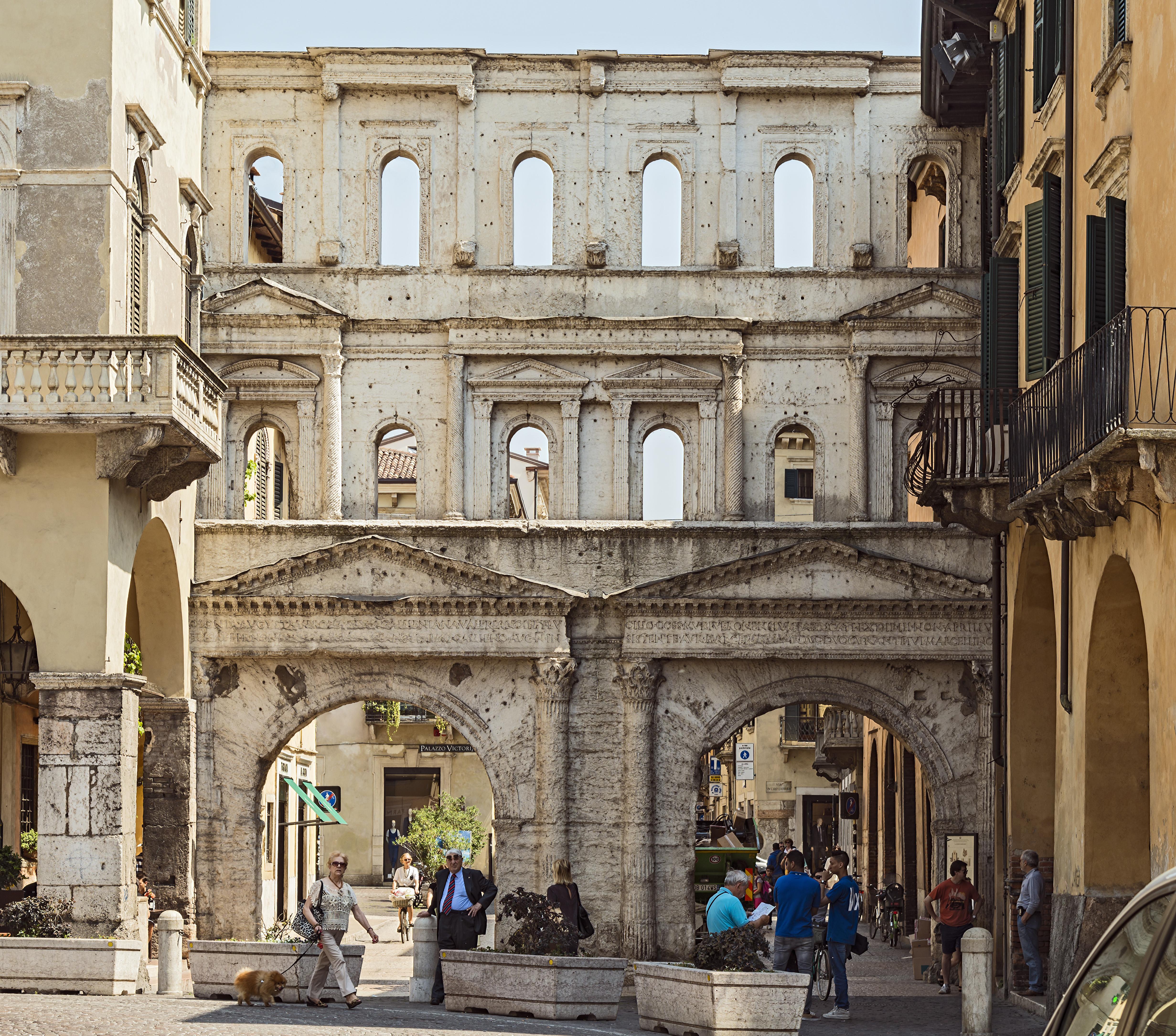
Porta Borsari rises in Verona as a Roman city gate, marking the route through the city’s historic centre. White limestone gives the surviving façade a bright, formal presence. Two broad arches stand between semi-columns with Corinthian capitals, beneath an entablature and pediment. Above them, arched windows fill a two-storey wall, with some set inside niches topped by triangular pediments.
The gate once controlled Verona’s main entrance from the Via Postumia, the Roman road linking Genoa with other cities. Soldiers collected duties from travellers entering the city. An inscription connected with Emperor Gallienus records reconstruction in 265 AD. Earlier fortifications, lookout towers, and an inner courtyard have disappeared, leaving the decorated limestone front. A nearby temple to Jupiter helped give the entrance its Roman name, Porta Iovia. Medieval travellers knew it as Porta di San Zeno, before the present name emerged from the Latin word bursarii. The surviving arches still frame a passage used by locals and visitors through Verona.
- City
- Verona
- Content updated
Take this page with you
The myTuur app is free, and once you are standing at a spot its story starts by itself.


Spots like this one are the stops myTuur strings into tours through Verona. In the app, each story begins where you stand: walk up to a spot and it starts, read it on screen or listen as you go, then follow the route to the next one.
What is myTuur?
myTuur is a free city-guide app. Its tours are built from spots, and each spot carries a story that starts when you get there, to read or to listen to as you like.