Manastiri i Graçanicës
At the edge of Prishtina in Kosovo stands the Manastiri i Graçanicës, one of the most important sacred buildings of Serbian-Byzantine architecture. King Stefan Uroš II Milutin, among the most influential rulers of the Nemanjić dynasty, had it built between 1313 and 1321. Its plan inscribes a double cross, and the walls alternate bands of brick and stone. Four freestanding pillars carry the great dome at its centre. Smaller domes and half-domes ring it, and a three-part altar space carries a pronounced central apse.
The ground beneath the church reaches far back: Roman Dardania, already Christian by the fourth century. Emperor Justinian I promoted the region and expanded cities such as Ulpiana. Under him, a three-naved early Christian basilica stood here in the sixth century. That first basilica fell into ruin over the following centuries. In the thirteenth century a smaller church probably rose on its remains, perhaps under the influence of Catholic merchants from Dubrovnik. When Milutin's builders raised the present church, they took stone from ruined Ulpiana. Look at the lower walls and you can still find Roman tombstones and antique inscriptions.
Step inside and you find the frescoes of 1321 and 1322, which rank among the masterworks of the Palaiologan Renaissance. Scenes from the lives of Jesus, Mary and the saints cover the walls, domes and vaults. The narthex holds portraits of Milutin, his wife Simonida and his mother Hélène d'Anjou, all in monastic robes. One composition traces the Nemanjić genealogy from Stefan Nemanja down to Milutin himself. In 2006 UNESCO placed the church on the World Heritage List as part of the Medieval Monuments in Kosovo. Serbian Orthodox nuns live, pray and work in the monastery to this day. They care for the building, paint icons and tend the garden.
- City
- Pristina
- Content updated
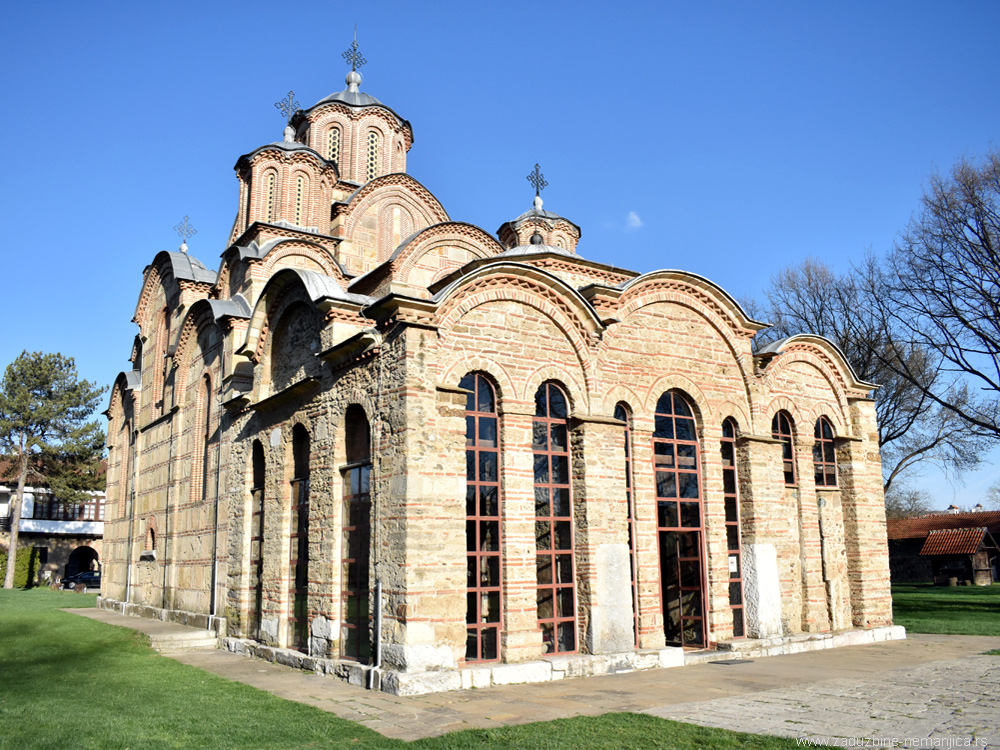
Image: wikimedia
Take this page with you
The myTuur app is free, and once you are standing at a spot its story starts by itself.


Spots like this one are the stops myTuur strings into tours through Pristina. In the app, each story begins where you stand: walk up to a spot and it starts, read it on screen or listen as you go, then follow the route to the next one.
What is myTuur?
myTuur is a free city-guide app. Its tours are built from spots, and each spot carries a story that starts when you get there, to read or to listen to as you like.