16. Artikel der Menschenrechte
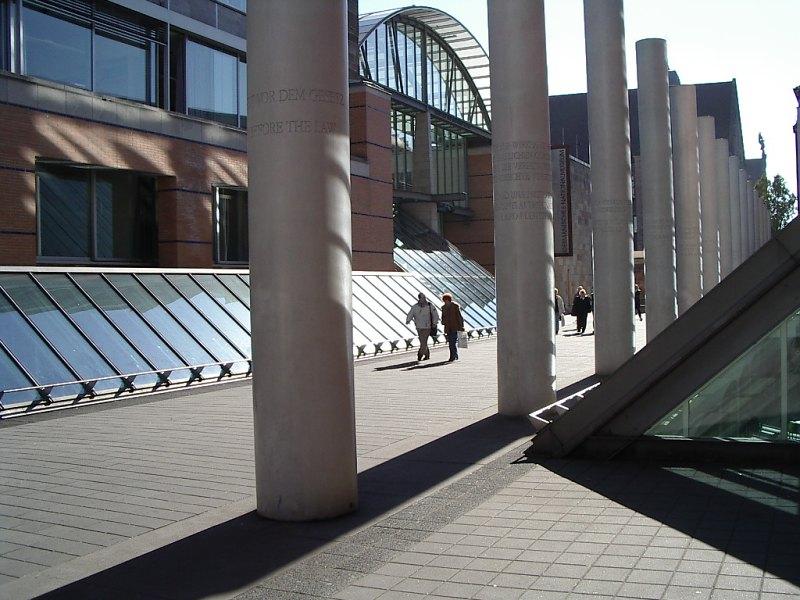
The 16. Artikel der Menschenrechte forms part of Dani Karavan’s Way of Human Rights in Nuremberg, Germany. The Israeli artist created this monumental outdoor sculpture.
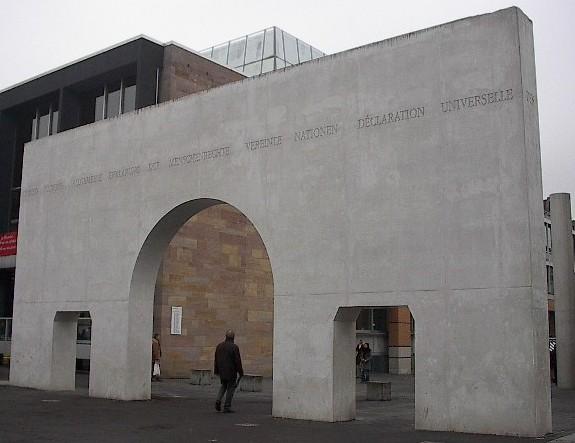
The work connects Kornmarkt street with the medieval city wall beside the Germanisches Nationalmuseum. A north-facing gate marks the route beside the museum.
White concrete pillars carry articles from the Universal Declaration of Human Rights in German and another language. A columnar oak joins the pillars along the route.
Their alignment stands among monastery remains, Sep Ruf buildings, and a glass-enclosed entrance from the twentieth century. The medieval city wall remains visible beside the sculpture.
Karavan’s design emerged from a Germanisches Nationalmuseum competition and links public art with Nuremberg’s human-rights history. Nuremberg presents the monument as a sign of peace.
The site also recalls the city’s effort to confront Nazi-era history through public space and human-rights education. The sculpture carries that message in concrete, glass, and living wood.
- City
- Nuremberg
- Content updated
Take this page with you
The myTuur app is free, and once you are standing at a spot its story starts by itself.


Spots like this one are the stops myTuur strings into tours through Nuremberg. In the app, each story begins where you stand: walk up to a spot and it starts, read it on screen or listen as you go, then follow the route to the next one.
What is myTuur?
myTuur is a free city-guide app. Its tours are built from spots, and each spot carries a story that starts when you get there, to read or to listen to as you like.