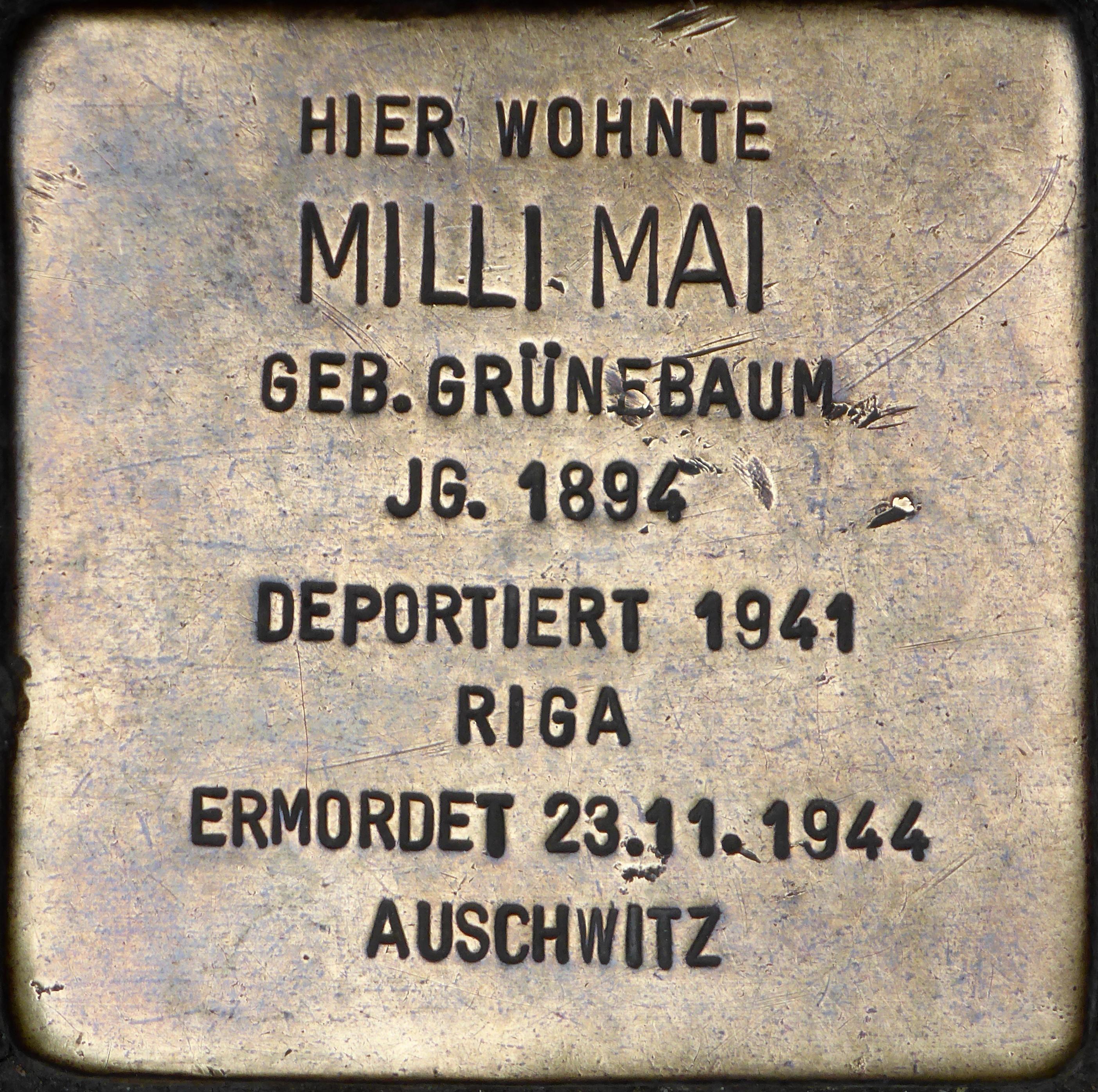
Milli Mai geb. Grünebaum
In Würzburg, Milli Mai geb. Grünebaum is remembered by a Stolperstein set into the pavement. The small square brass plaque marks where she lived and identifies her as a victim of National Socialist persecution. A passing footstep can bring her story into an ordinary walk through the city.
Artist Gunter Demnig began the Stolpersteine project in 2005 as a way to commemorate people persecuted or murdered by the Nazi regime. Würzburg formed its local working group that year, and the first stones appeared in 2006. Each plaque carries a person’s name, birth year, fate, and, when known, details of death. Research by local historians or relatives supports the laying of each stone.
Stolpersteine across Würzburg connect personal lives with the city’s history of destroyed synagogues and deported Jewish residents. The Jewish community supports this tangible form of remembrance, while volunteers clean the brass so the engraved names remain visible. Here, a small square at ground level keeps Milli Mai’s memory within the place where her life unfolded.
- City
- Würzburg
- Content updated
Take this page with you
The myTuur app is free, and once you are standing at a spot its story starts by itself.


Spots like this one are the stops myTuur strings into tours through Würzburg. In the app, each story begins where you stand: walk up to a spot and it starts, read it on screen or listen as you go, then follow the route to the next one.
What is myTuur?
myTuur is a free city-guide app. Its tours are built from spots, and each spot carries a story that starts when you get there, to read or to listen to as you like.