Muralla islámica (s.XI-XII)
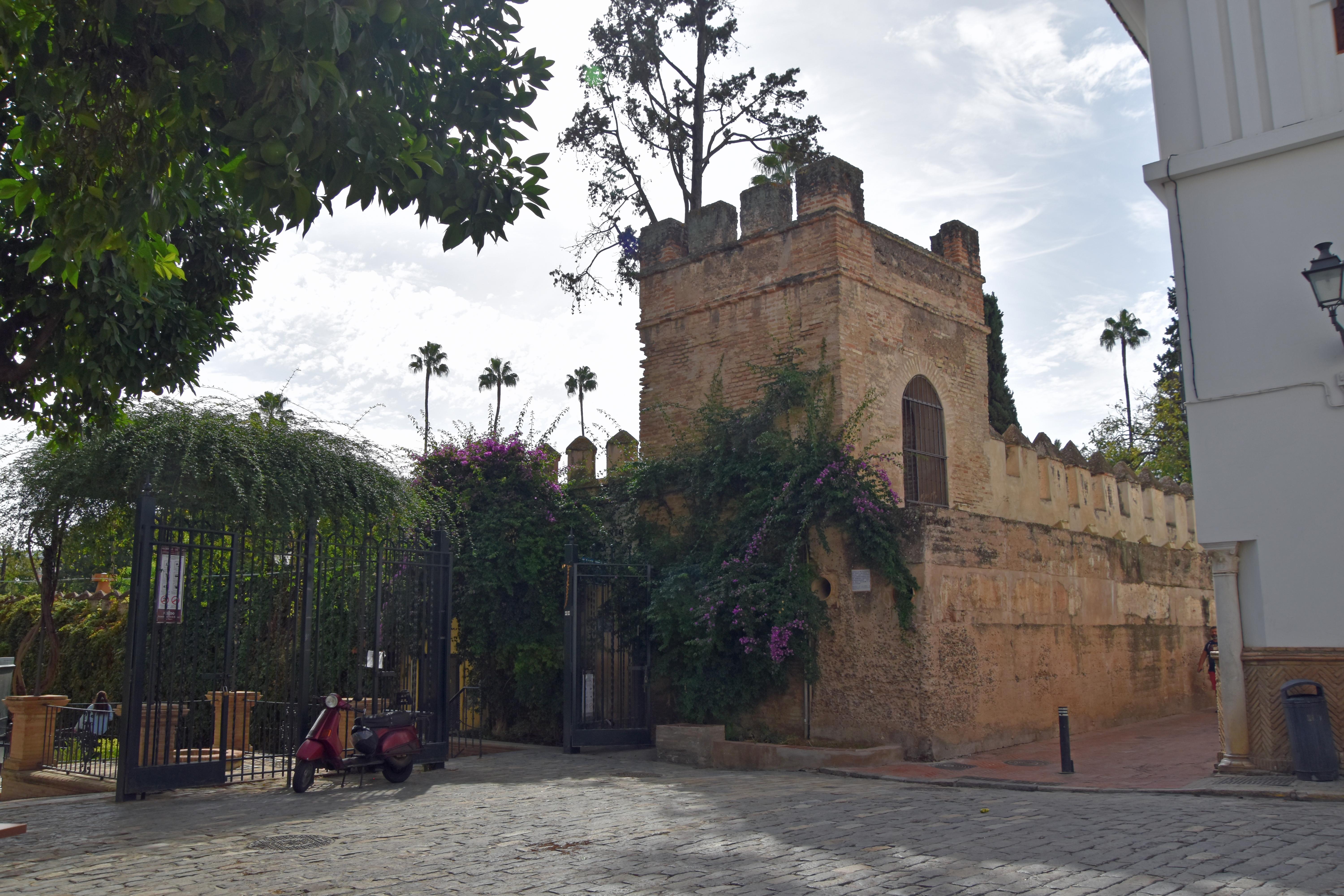
Muralla islámica (s.XI-XII) preserves a surviving section of Seville’s defensive walls, built during Muslim rule in the eleventh and twelfth centuries. Seville then formed part of Al-Andalus, under Muslim dynasties. The fortification protected an important political and economic centre while also marking the city’s boundaries and organising its neighbourhoods. Narrow streets and busy markets once developed behind these protective walls.
The builders used tapial, compacting earth, lime, and gravel between wooden frames to create the structure. That rammed-earth fabric still survives in visible sections. The original fortification stretched several kilometres, with more than a hundred towers and gates controlling entry into the city. Puerta de la Macarena and Puerta de Córdoba ranked among its best-known gateways.
After the Christian conquest in the thirteenth century, some sections remained while others disappeared or entered newer buildings. Battlements, towers, and arrow slits reveal how defence shaped medieval Seville. Today, surviving sections stand within houses, shops, and streets, connecting the modern city with its Islamic past.
- City
- Seville
- Content updated
Take this page with you
The myTuur app is free, and once you are standing at a spot its story starts by itself.


Spots like this one are the stops myTuur strings into tours through Seville. In the app, each story begins where you stand: walk up to a spot and it starts, read it on screen or listen as you go, then follow the route to the next one.
What is myTuur?
myTuur is a free city-guide app. Its tours are built from spots, and each spot carries a story that starts when you get there, to read or to listen to as you like.