Hiller-Brandtsche Häuser
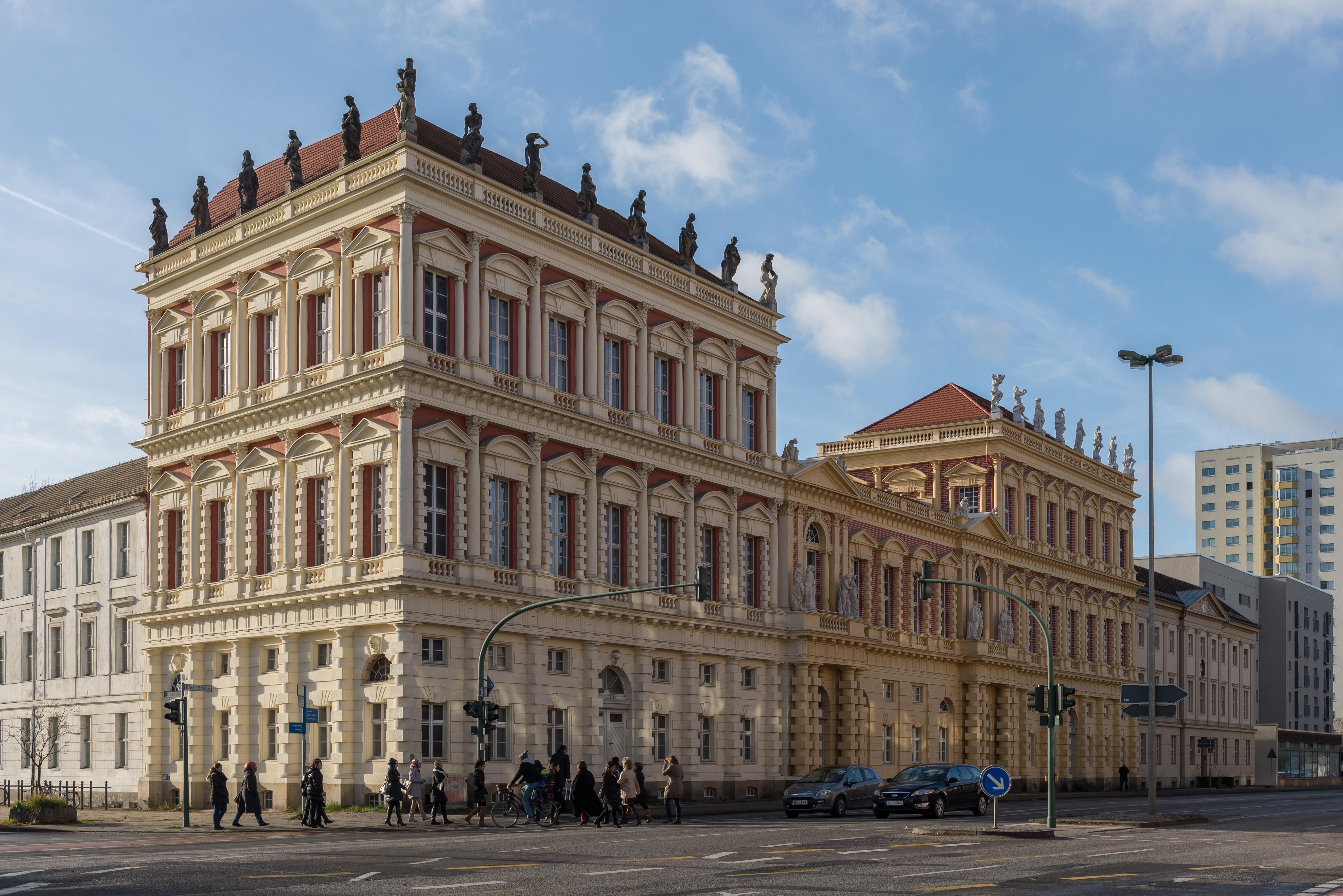
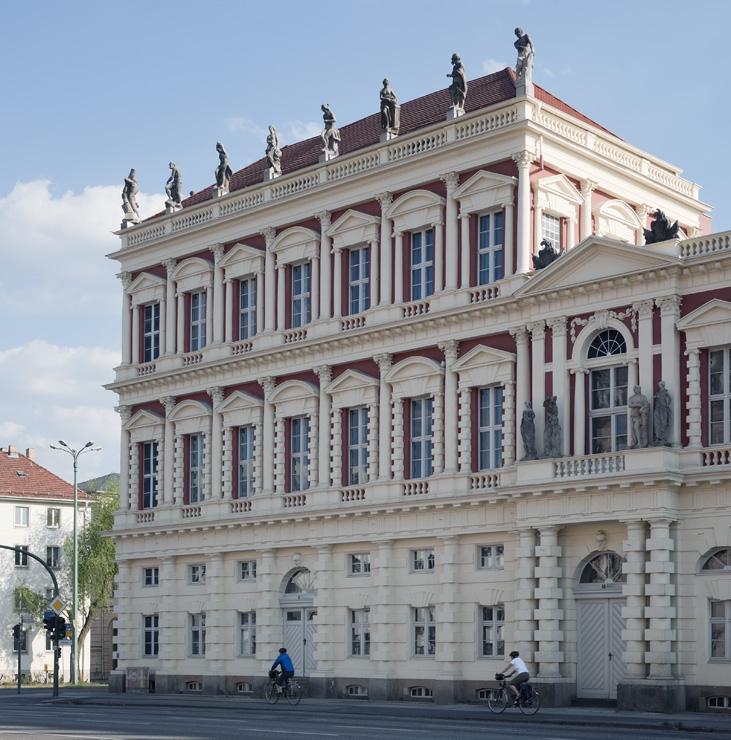
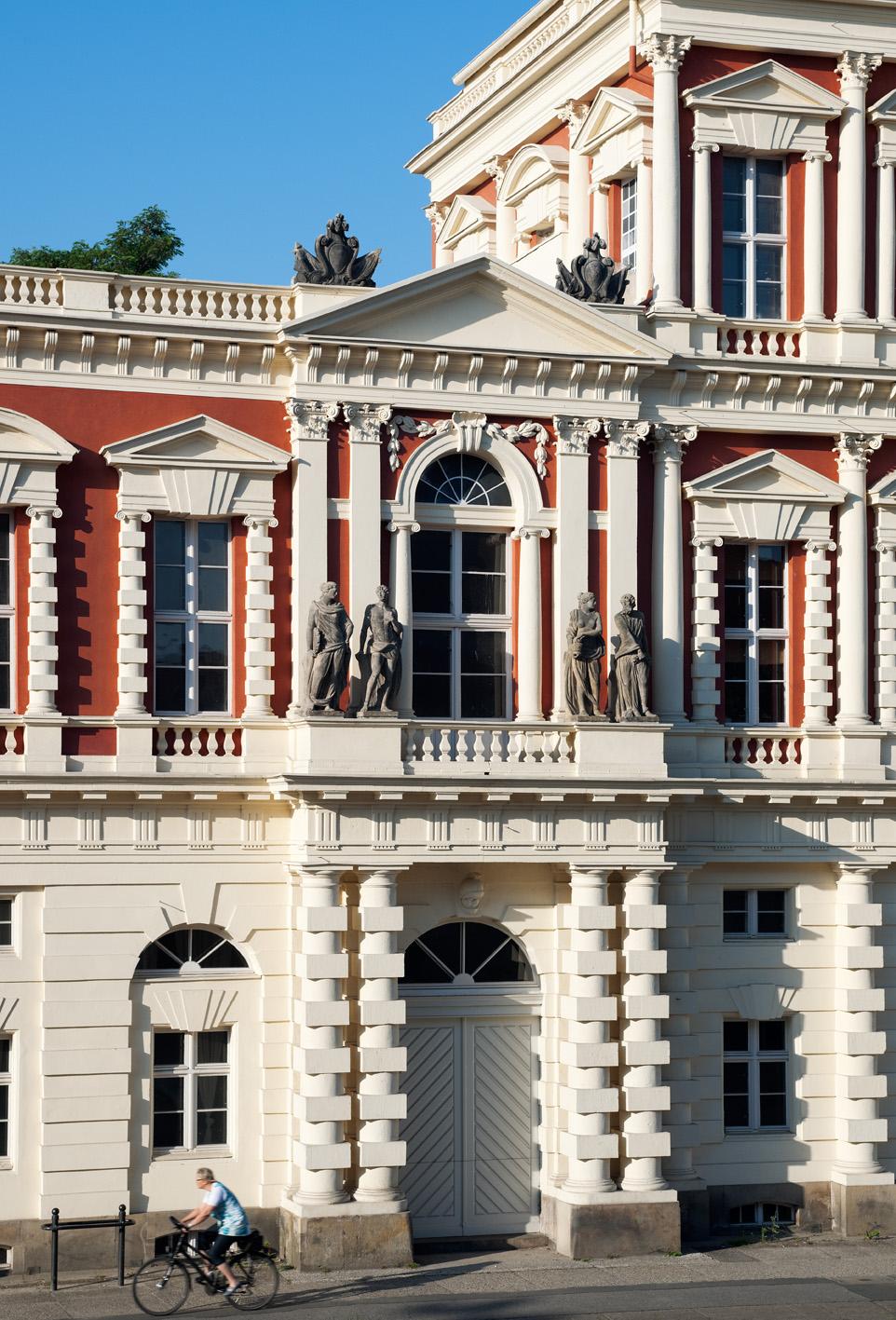
The Hiller-Brandtsche Häuser form an eighteenth-century architectural group on Breite Straße in Potsdam, Germany. Completed in 1769, the buildings present a unified façade with Tuscan and Corinthian columns, pilasters, and a balustrade. Statues and reliefs fill the frontage, including figures connected with ancient mythology and Roman deities.
King Frederick II commissioned the complex while reshaping Breite Straße as a grand boulevard. Architect Georg Christian Unger drew on Inigo Jones’s unbuilt Whitehall Palace design and Andrea Palladio’s Renaissance work. Two residential buildings flank a central barracks, reflecting a common arrangement in eighteenth-century Prussia. Johann Friedrich Hiller and Johann Gebhardt Brandt gave the buildings their names through their trades as merchant and tailor. Christian Heinrich Ziller renovated the complex in 1833, while later uses included a Socialist Art gallery and museum exhibitions. Acquired in 2011, the buildings became apartments by 2013 after restoration work.
That restoration recovered the eighteenth-century façade colours, garden, and historic staircase. The buildings survived the Second World War among the few large structures preserved on Breite Straße. Across the street, the complex forms a gateway with the Great Orphanage.
- City
- Potsdam
- Content updated
Take this page with you
The myTuur app is free, and once you are standing at a spot its story starts by itself.


Spots like this one are the stops myTuur strings into tours through Potsdam. In the app, each story begins where you stand: walk up to a spot and it starts, read it on screen or listen as you go, then follow the route to the next one.
What is myTuur?
myTuur is a free city-guide app. Its tours are built from spots, and each spot carries a story that starts when you get there, to read or to listen to as you like.