Bygdøy kirke
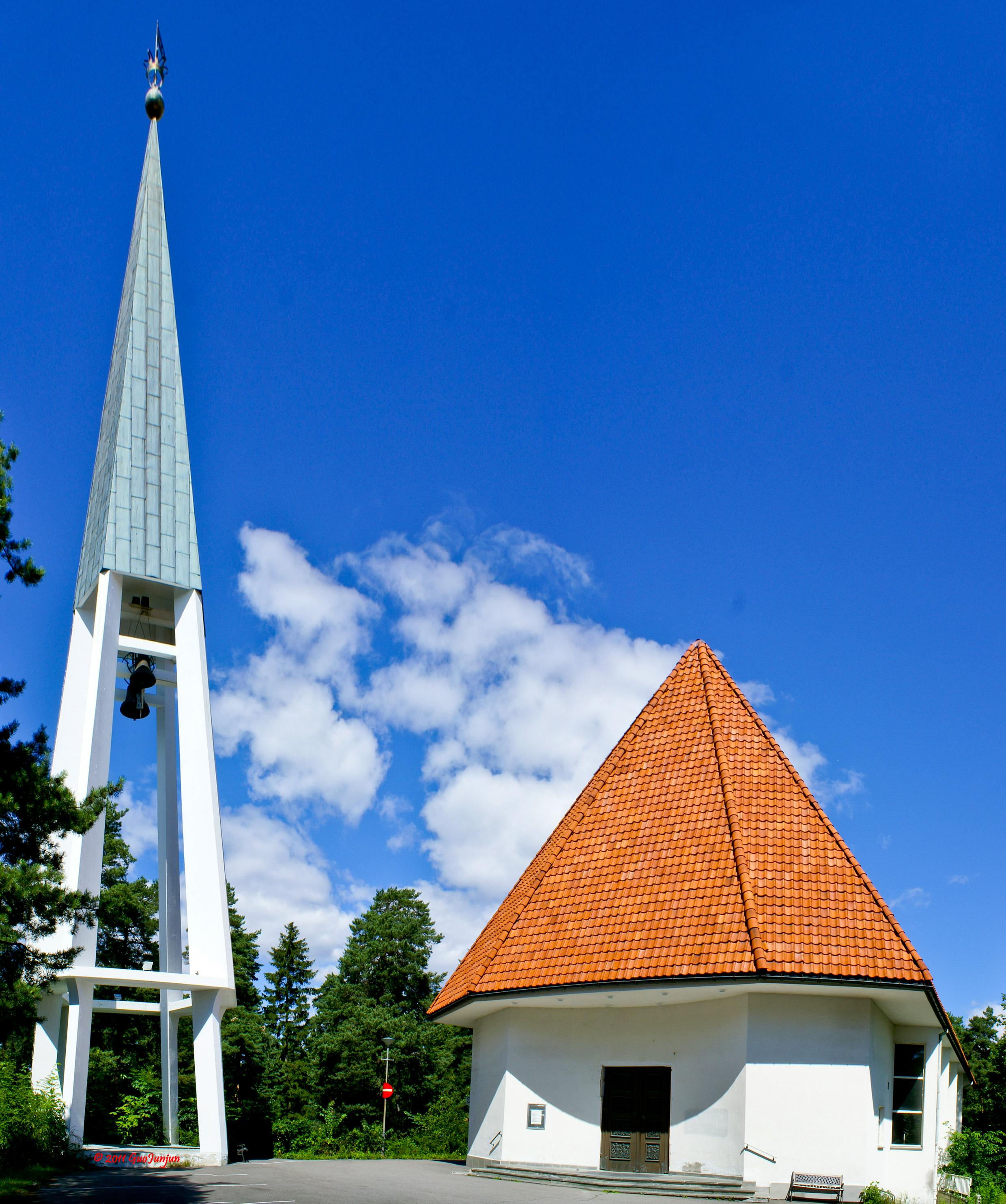
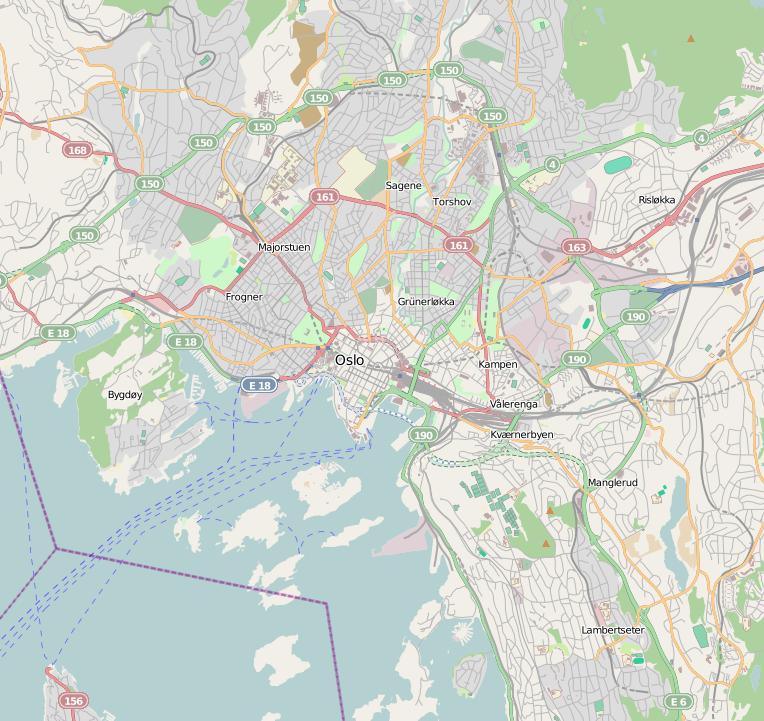
Bygdøy kirke stands on Oslo’s Bygdøy peninsula, surrounded by trees and set on a small hill. Architect Finn Bryn designed its distinctive fan-shaped plan. White-painted concrete and a broad sloping ceiling give the building its clear exterior and spacious interior. A separate bell tower stands beside the main church.
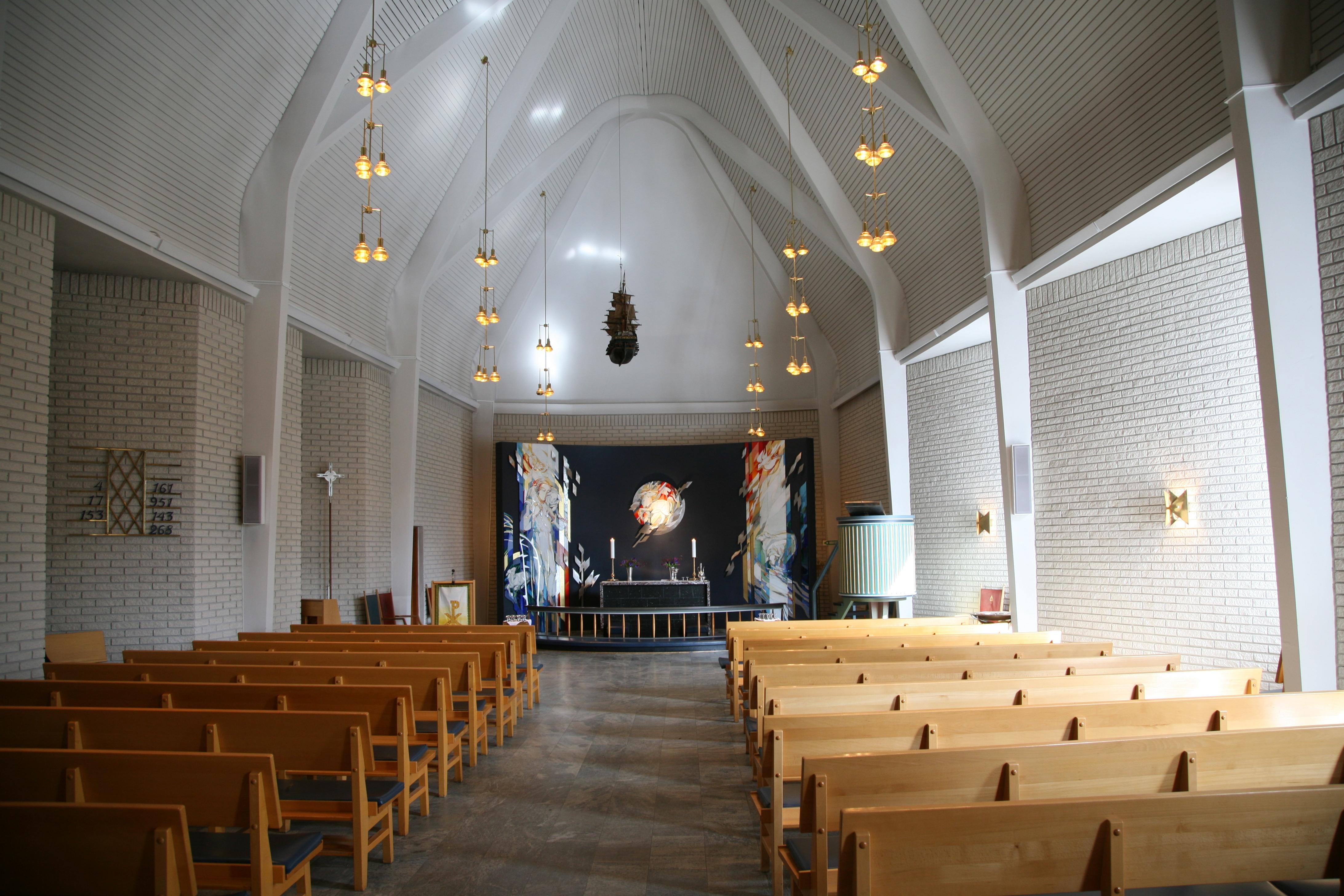
White-painted brick lines the interior, where a glass mosaic and brass cross provide distinctive focal points. The altar mosaic combines glass, metal, and gold-plated fields. Veslemøy Nystedt Stoltenberg created its imagery of the Good Shepherd, the Lamb of God, and waters of rest. Turquoise enamel pieces decorate the large brass cross.
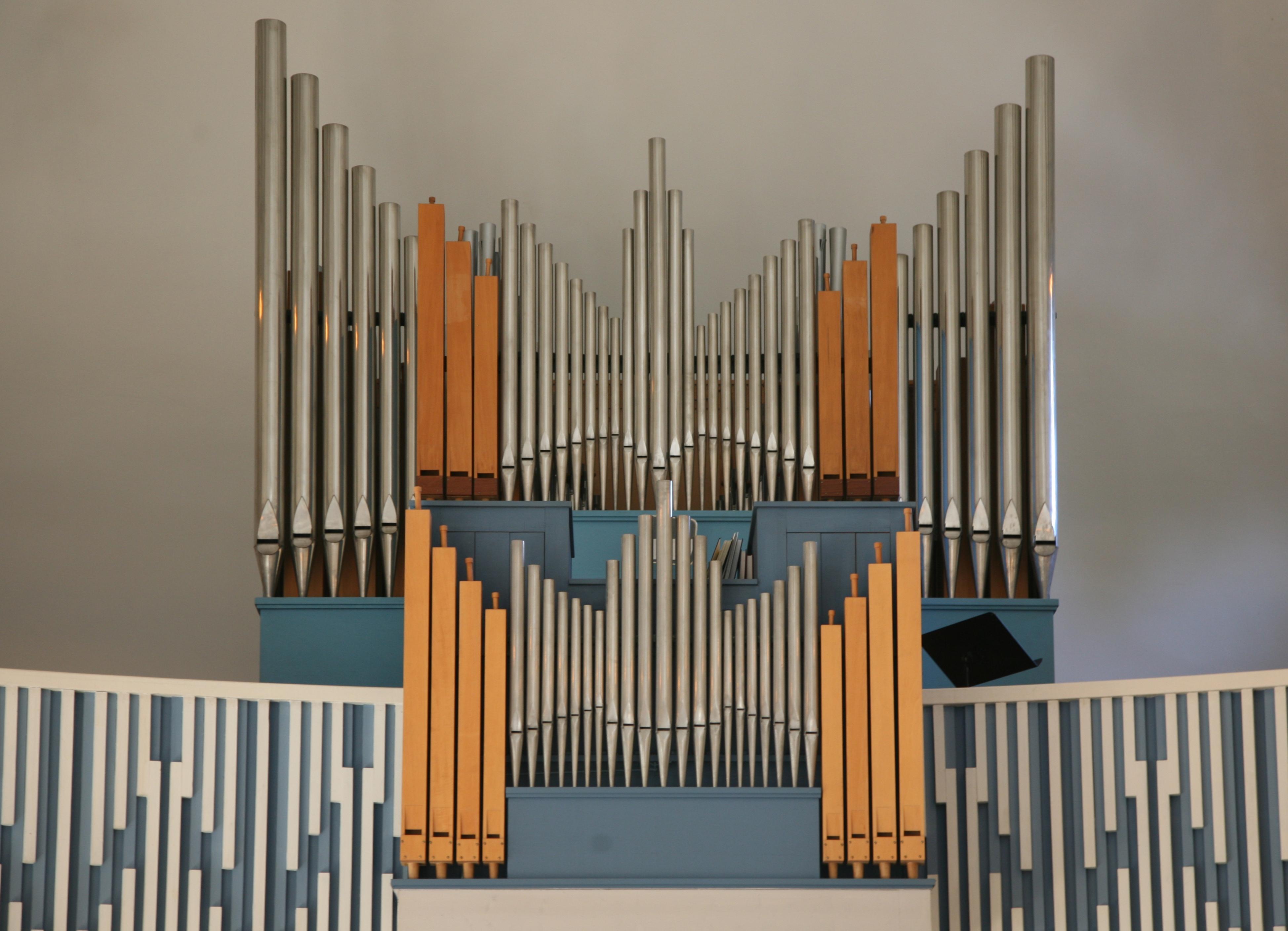
Copper doors with reliefs by Ørnulf Bast mark the western entrance, while a ship model hangs from the ceiling. The ceiling model represents an old eighteenth-century ship. A pipe organ built by Jørgensen in Oslo supports worship and concerts within the church. The basement contains a sacristy, baptistry, lounge, and kitchen.
The church replaced a Bygdøy chapel destroyed by fire before its construction. Its preserved silver connects the present building with that former chapel. Heritage protection recognizes Bygdøy kirke within Norway’s cultural history and architectural record. Community life includes concerts, shared singing, and volunteer activities.
- City
- Oslo
- Content updated
Take this page with you
The myTuur app is free, and once you are standing at a spot its story starts by itself.


Spots like this one are the stops myTuur strings into tours through Oslo. In the app, each story begins where you stand: walk up to a spot and it starts, read it on screen or listen as you go, then follow the route to the next one.
What is myTuur?
myTuur is a free city-guide app. Its tours are built from spots, and each spot carries a story that starts when you get there, to read or to listen to as you like.