29. Artikel der Menschenrechte
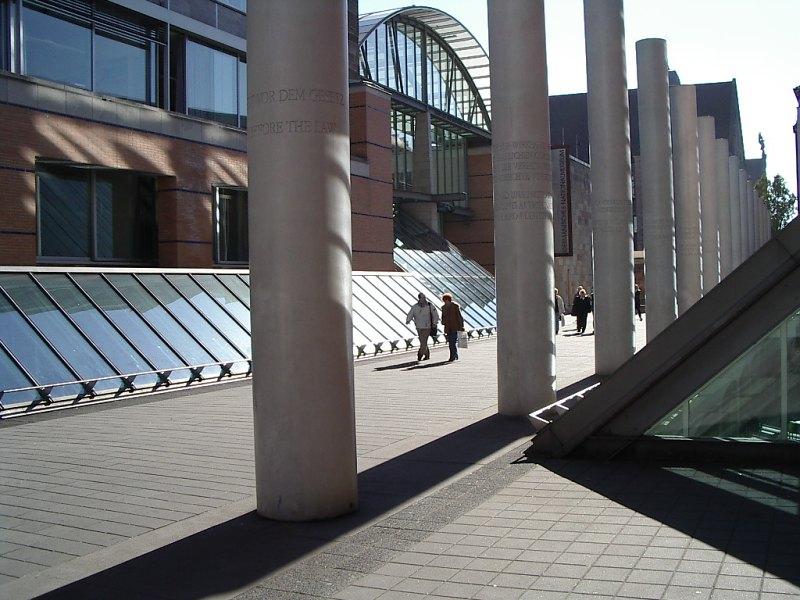
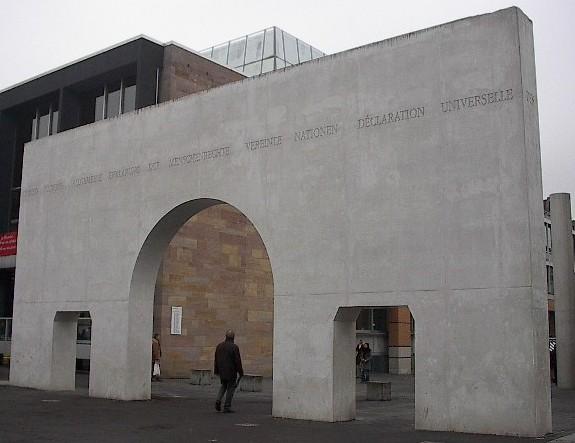
29. Artikel der Menschenrechte stands in Nuremberg as part of Dani Karavan’s Way of Human Rights. The artwork occupies a public passage beside the Germanisches Nationalmuseum.
White concrete pillars trace an axis between the museum’s newer and older buildings, linking Kornmarktstraße with the medieval city wall. A northern gate echoes the medieval city entrance. The installation combines pillars, buried circular markers, and a columnar oak within one architectural sequence. The artwork presents human-rights articles in German and another language.
The inscriptions include Yiddish and languages associated with people facing discrimination, connecting memory with present human-rights concerns. Karavan’s design joins public art with layered local history. Remnants of a monastery meet the medieval wall, buildings by Sep Ruf, and a glass entrance. Nuremberg’s past remains visible throughout this historic passage.
The monument also reflects the city’s effort to frame its history through peace, remembrance, and human rights. This public site supports remembrance and human-rights dialogue. Its setting brings architecture, memory, and civic purpose into the same urban route.
- City
- Nuremberg
- Content updated
Take this page with you
The myTuur app is free, and once you are standing at a spot its story starts by itself.


Spots like this one are the stops myTuur strings into tours through Nuremberg. In the app, each story begins where you stand: walk up to a spot and it starts, read it on screen or listen as you go, then follow the route to the next one.
What is myTuur?
myTuur is a free city-guide app. Its tours are built from spots, and each spot carries a story that starts when you get there, to read or to listen to as you like.